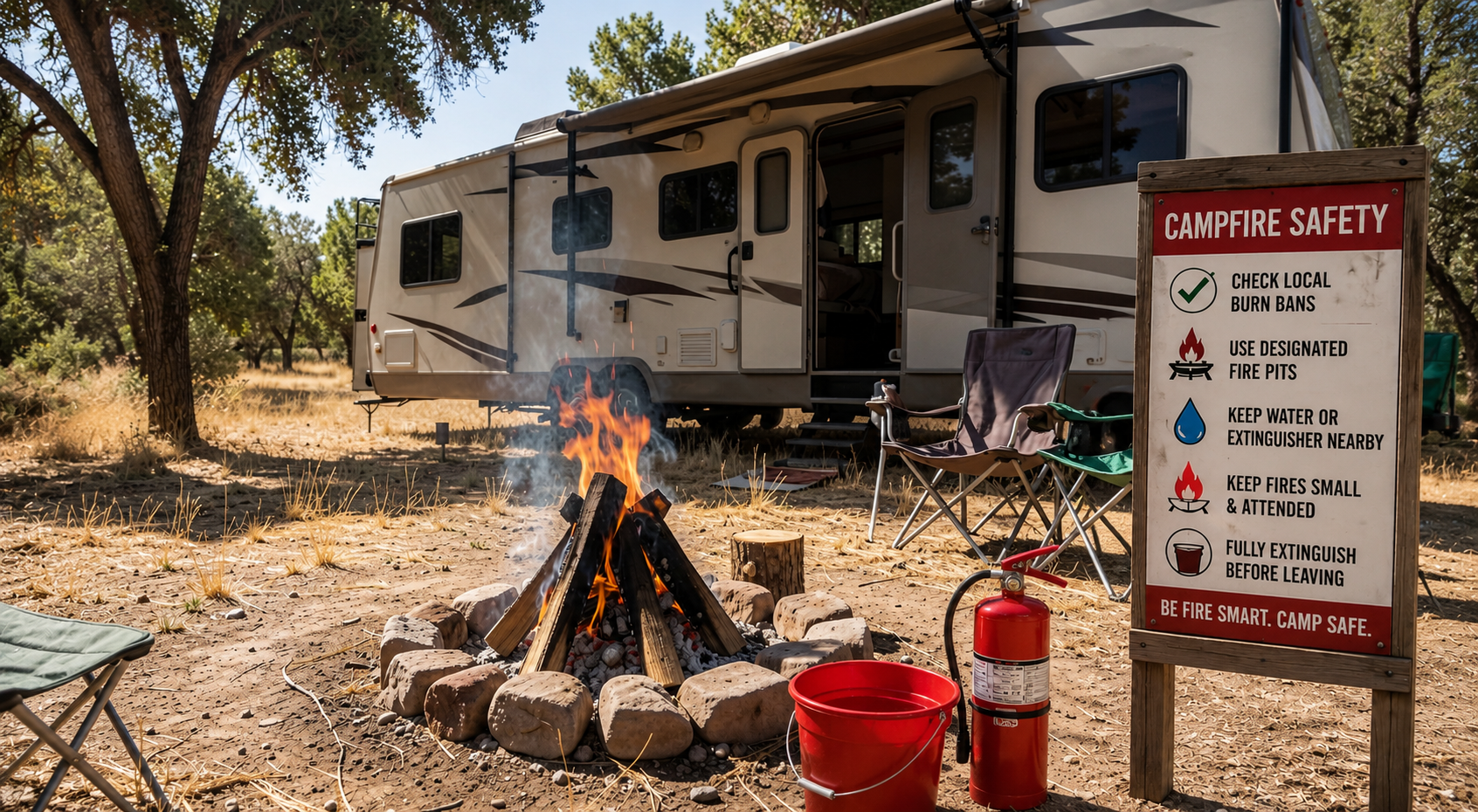
RV Campfire Safety Tips for Dry Summer Conditions: The Complete 2026 Guide
There's nothing like ending a day on the road with a crackling campfire - but during dry summer months, that same fire can turn a relaxing evening into a serious hazard in seconds. As temperatures climb and vegetation dries out, campgrounds across the country see a sharp rise in fire-related incidents every year, many of them completely preventable. Whether you're a first-time RVer or a seasoned road warrior, knowing how to build, manage, and extinguish a campfire safely during drought conditions isn't optional - it's essential. This guide breaks down everything you need to know to enjoy your fire pit responsibly this summer, without putting yourself, your rig, or the surrounding land at risk.
Dry summer conditions dramatically increase wildfire risk for a few key reasons:
Lower humidity: Dries out grass, brush, and fallen leaves, turning them into ready fuel
Higher winds: In open camping areas can carry embers far beyond a fire pit's edge
Drought-stressed vegetation: Ignites faster and burns hotter than healthy plant growth
Extended heat: Means the ground itself, including root systems, can smolder undetected
What might be a manageable fire in spring can spread rapidly in July or August. This is why many campgrounds and counties issue seasonal burn bans and why even permitted fires require extra caution during these months.
Before You Light: Pre-Fire Safety Checklist
1. Check Local Burn Ban Status Burn bans can be issued at the county, state, or campground level, and they change quickly during heat waves. Always check:
The campground's posted fire policy at check-in
County or municipal fire department websites
State forestry or emergency management alerts
Never assume last week's rules still apply. Conditions during a dry summer can shift from "caution" to "total burn ban" within days.
2. Use a Designated, Elevated Fire Pit Ground-level fire rings can allow heat to transfer into dry soil and root systems below. Where available, use raised metal fire pits or the campground's designated fire rings rather than building your own.
3. Clear a Safety Perimeter Clear all flammable material - dry grass, leaves, pine needles, and overhanging branches - in at least a 10-foot radius around the fire pit. Check that nothing flammable is stored nearby, including camp chairs, firewood stacks, or propane tanks.
4. Check Wind Conditions Skip the fire entirely if winds exceed 10-15 mph. Wind is the number one factor in embers jumping beyond a controlled fire area and igniting nearby dry brush.
Safe Campfire Practices While It's Burning
Practice Why It Matters Keep fires small and manageable Smaller fires produce fewer airborne embers and are easier to extinguish quickly Never leave a fire unattended Even a few minutes without supervision is enough for wind to spread embers Keep water or a fire extinguisher Immediate response can stop a small flare-up before it spreads within arm's reach Avoid burning trash or treated wood These can produce larger sparks and toxic smoke Supervise children and pets closely Fast-moving embers and hot fire pit edges are common causes of camp injuries
A fire isn't out just because the flames are gone. Follow this three-step method every time:
Drown it - Pour water generously over the entire firebed, not just the visible flames
Stir it - Use a stick or shovel to mix ashes and embers, exposing any hidden hot spots
Feel it - Hover your hand (without touching) above the ash. If you feel heat, it's not out. Repeat the process until the area is cool to the touch
A fire that looks "dead" can still hold enough heat to reignite hours later, especially in dry, windy conditions. This is one of the leading causes of overnight and next-morning wildfire starts near campgrounds.
What to Do During a Total Burn Ban
When conditions are severe enough that open fires are banned entirely, you don't have to skip the campfire experience altogether. Consider these alternatives:
Propane fire pits - Many campgrounds permit contained propane or gas fire features even during wood-burning bans, since they don't produce embers or sparks
Battery-powered LED fire pits - A flame-free option that still creates ambient light and a gathering point for the evening
Solar lanterns and string lights - Create a cozy outdoor atmosphere without any fire risk
Portable fire pits with spark screens - If permitted, these enclosed designs significantly reduce ember escape compared to open rings
Always confirm with campground staff which alternatives are allowed under the current ban level, since rules vary by jurisdiction.
Common Campfire Mistakes to Avoid This Summer
Using accelerants like gasoline or lighter fluid to start a fire
Building fires larger than necessary "for atmosphere"
Leaving a fire smoldering overnight, assuming it will burn out on its own
Placing fire pits too close to RV awnings, slide-outs, or propane connections
Ignoring posted campground signage about current fire restrictions
Frequently Asked Questions
Is it safe to have a campfire during a drought? Only if your campground and local authorities haven't issued a burn ban, and only with strict precautions—small flame size, cleared perimeter, water on hand, and full attention until it's completely extinguished.
How do I know if there's a burn ban in effect? Check with campground staff at check-in, look for posted signage, or search your county's fire department or emergency management website for current fire danger levels.
What's the safest alternative to a wood fire during a burn ban? Propane fire pits and battery-powered LED fire features are generally allowed even during wood-burning bans and provide a similar evening ambiance without ember risk.
How long should I wait before leaving a "dead" campfire? There's no fixed time - instead, use the drown-stir-feel method until the entire fire bed is cool to the touch, not just visually free of flame.
Can RV awnings or slide-outs catch fire from a nearby campfire? Yes. Wind-carried embers and radiant heat can ignite awning fabric or nearby equipment, which is why fire pits should always be placed well away from your rig, not just other campers.
Enjoy the evening responsibly
A campfire is one of the best parts of the RV lifestyle, but during dry summer months, a few extra precautions make the difference between a great night under the stars and a preventable emergency. Follow local burn restrictions, keep your fire small and supervised, and always extinguish completely before turning in. At Lubbock RV Park, we post real-time fire restriction updates at check-in and throughout the campground, along with designated fire pit areas designed with summer safety in mind - so you can relax around the fire knowing you're doing it the right way. Book your stay today, and let us help you make the most of your summer camping trip safely.