Blank Page - Why Summer Is the Best Time for Stargazing and Camping Near Lubbock
Image may be subject to copyright
Why Summer Is the Best Time for Stargazing and Camping Near Lubbock
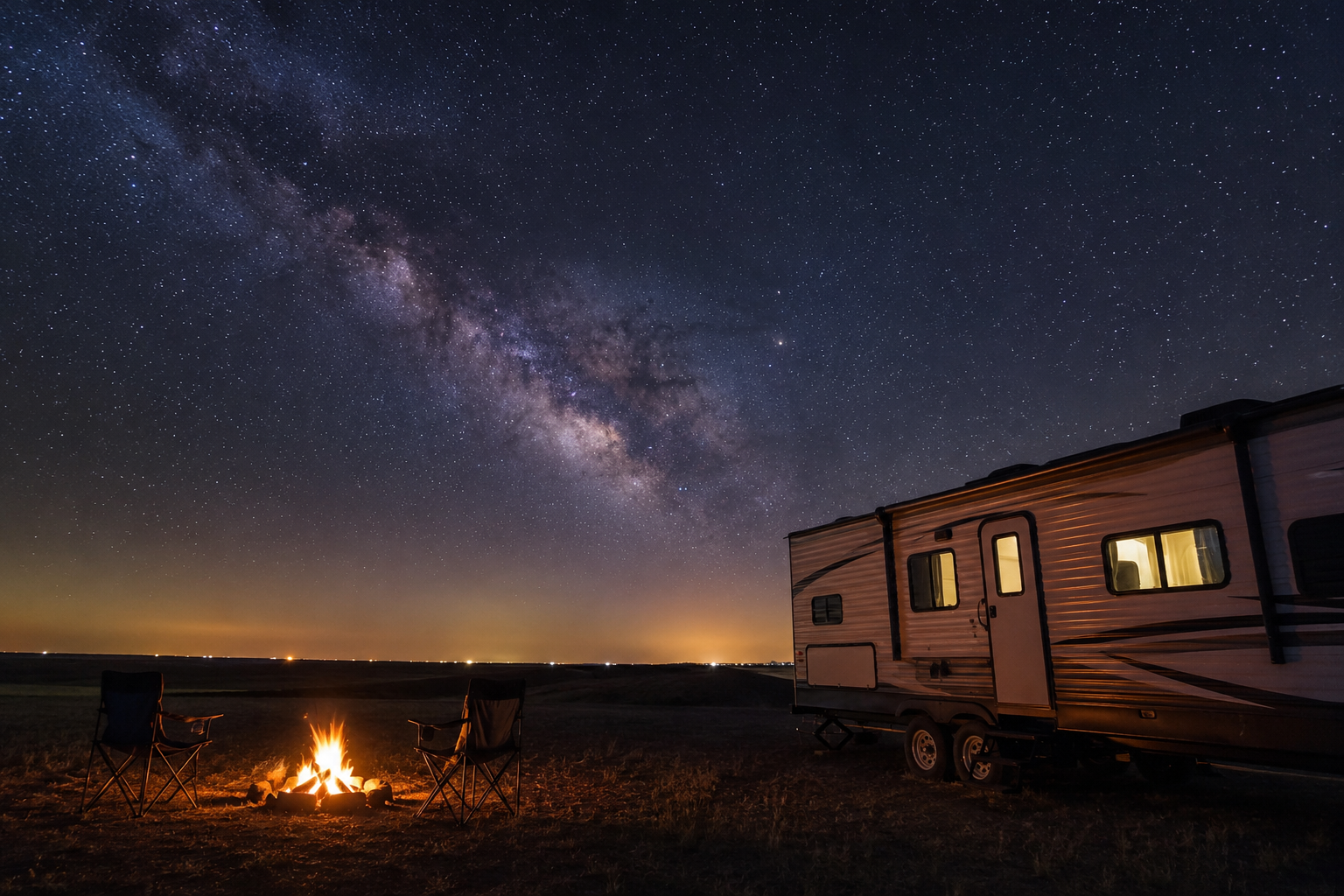
If you've ever stepped outside on a clear West Texas night and looked up, you already know what we're talking about. Out here, away from the glow of big-city skylines, the sky does something most people never get to see anymore: it actually goes dark. Really dark. Dark enough that the Milky Way shows up as an actual band of light stretching overhead instead of something you only see in photos. And summer? Summer is when it all comes together. Longer nights to plan around campfires, warm evenings that don't send you running for a jacket, and a calendar packed with meteor showers and clear-sky stretches — it's the season Lubbock-area stargazers wait all year for. Here's why and how to make the most of it from your campsite.
Why Lubbock, TX, Offers Some of the Best Stargazing in West Texas
Lubbock isn't a tiny town, so you might assume the city lights ruin the view. They don't—not if you get even a short drive outside town. The South Plains sits in a stretch of West Texas that astronomers and stargazers consider some of the darkest sky in the state, generally rated Class 2 on the Bortle scale (1 is pitch-black, and 9 is downtown-bright). That's genuinely good. For comparison, most major U.S. cities sit at a 7 or 8.
What makes the region work so well for stargazing:
Wide-open, flat terrain: No mountains or tree lines blocking the horizon, so you get sky in every direction.
Low humidity: Less haze in the air means crisper, more contrasted views of stars and planets.
Distance from major light domes: Lubbock isn't sandwiched between two huge metros the way some Texas cities are, so the skyglow has room to fade fast once you're outside city limits.
You don't need to drive two hours into the Davis Mountains to get a good view (though if you ever want truly world-class dark skies, West Texas is home to one of the largest dark sky reserves on the planet, centered around the Big Bend region). For a solid night of stargazing, your own campsite just outside Lubbock will do the job.
Why Summer Is the Best Season for Stargazing Near Lubbock
You can technically stargaze year-round here, but summer stacks the deck in your favor in a few specific ways.
1. Comfortable Summer Nights for Camping and Stargazing
West Texas winters get cold and windy fast, which makes lying back on a blanket staring at the sky a lot less appealing. Summer evenings cool off just enough after sunset to be genuinely pleasant — perfect for setting up a camp chair, a thermos of coffee, and staying out for hours without freezing.
2. See the Milky Way Galaxy at Its Brightest
The core of the Milky Way — the bright, dense center of our galaxy — is only well-positioned for viewing from the Northern Hemisphere in the summer months, roughly June through August. This is the single biggest reason serious stargazers plan summer camping trips. You simply can't see this view in winter; the galactic core sits below the horizon.
3. Summer Meteor Showers Make Camping More Exciting
Summer and early fall bring some of the best meteor showers of the year, and 2026 is shaping up to be an especially good one: Perseid Meteor Shower – Peaks the night of August 12 into the early morning of August 13, 2026. This year is a standout because a new moon falls on the same day as the peak, meaning there's no moonlight washing out the fainter meteors. Expect dark skies and potentially rates approaching 100 meteors per hour under ideal conditions. Delta Aquariids – A smaller July shower, good for an early-summer warm-up. Translation: if you're planning one stargazing camping trip this year, mid-August is the night to circle on the calendar.
4. Longer Evenings Mean More Time Under the Stars
Even though summer days are long, once the sun does go down, you've got plenty of darkness to work with before sunrise. No rushing — you can ease into it after dinner and still catch hours of prime viewing.
A little prep makes a big difference in how much you actually see. Let your eyes adjust: It takes about 20–30 minutes for your eyes to fully adapt to the dark. Skip the phone flashlight—use a red-light headlamp if you need to see your gear, since red light doesn't reset your night vision the way white light does. Plan Your Trip Around the New Moon: A bright moon will wash out fainter stars and the Milky Way. Plan around the days near a new moon for the darkest possible sky. Bring the Right Stargazing Gear: A blanket or reclining chair, bug spray (West Texas nights can bring mosquitoes near any water source), and binoculars if you have them—you'd be surprised how much more detail shows up on the moon and brighter star clusters. Spend More Time Outside for Better Viewing: Stargazing isn't a five-minute activity. The longer you're out, the more your eyes adjust and the more meteors, satellites, and faint stars you'll start to pick out. Check Weather Conditions Before Your Trip: Clear skies matter more than the calendar. A perfectly timed meteor shower is no good under cloud cover.
Why Camping Is Better Than a One-Night Stargazing Trip
You could drive out from town, stargaze for an hour, and head home — but that misses the whole point. Setting up camp means:
You're not driving home tired and bleary-eyed at 2 a.m.
You get the golden hour before sunset and the quiet stillness right after sunrise too.
You're already set up for the next clear night if the first one gets clouded over.
A weekend camping trip turns one good night of stargazing into a full experience—campfire, quiet mornings, and a sky show that doesn't cost a thing.
Plan Your Summer Stargazing Camping Trip Near Lubbock RV Park
Lubbock RV Park sits close enough to town for convenience, but far enough out to give you genuinely dark, wide-open skies once the sun goes down. Whether you're coming through for the Perseids in August or just want a few clear nights under the stars, we've got a spot ready for you. Book your site today and get ready to see what a real West Texas sky looks like.